This page may contain affiliate links. If you buy through a sponsored link, we may earn a commission at no extra cost to you.

Homepage conversion review · Silent-buyer analysis

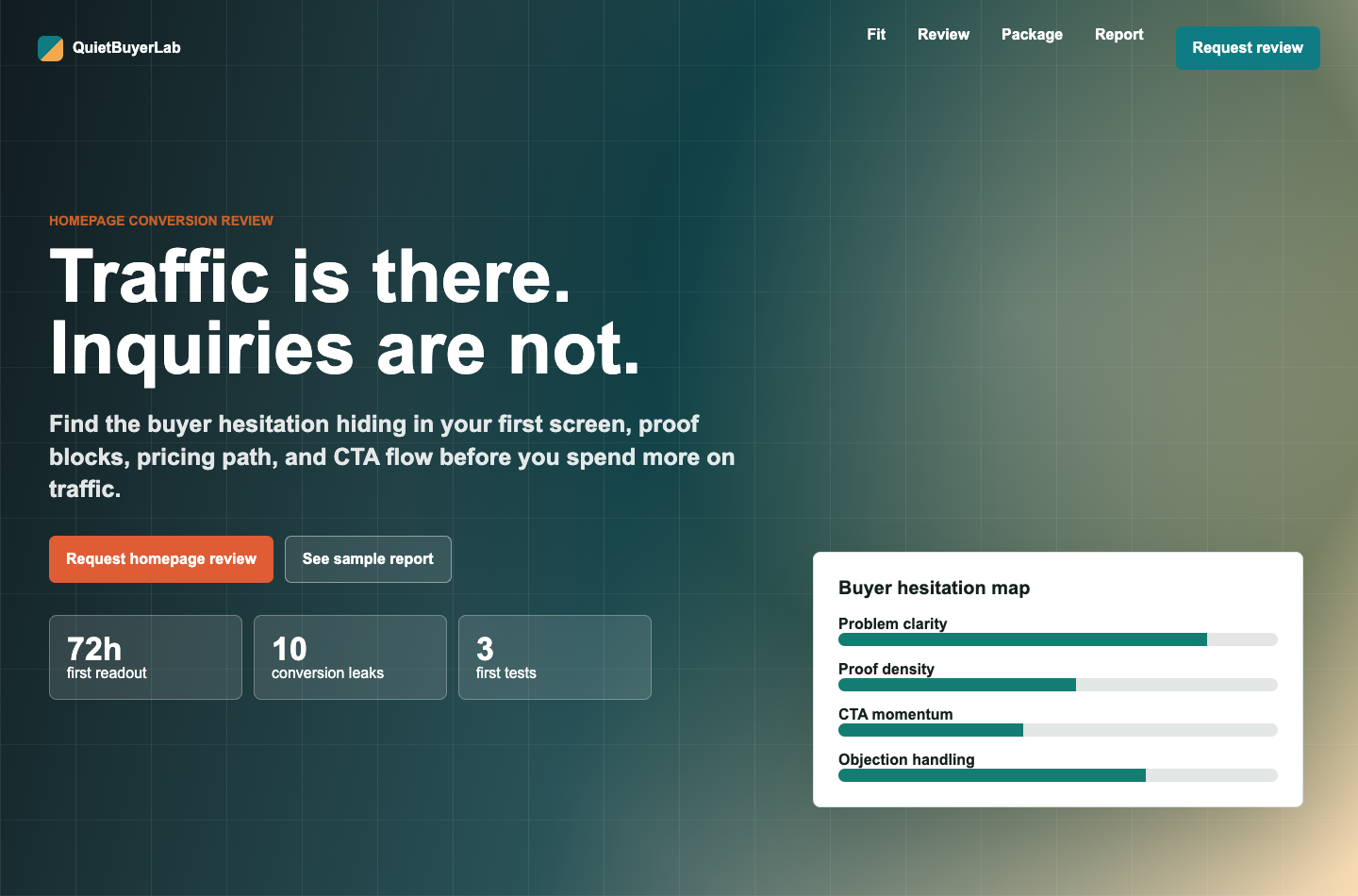
Find why quiet visitors do not request a demo.

Before buying more traffic, send one URL. Quiet Buyer Lab reviews first-screen clarity, proof density, CTA momentum, pricing hesitation, and adoption objections, then returns a 72-hour action map with ten friction points and three small experiments.

Live proof board

Show the buyer the review before asking for the URL.

The page now uses the saved QA screens as a visible conversion path: first-screen promise, self-check, deliverables, package boundary, and sample report. That makes the next click feel concrete instead of vague.

01Name hesitationThe page isolates why a visitor still waits. 02Show the outputLeak map, priority fixes, and copy candidates are visible. 03Ask for one URLThe first request stays public-safe and low risk. 04Quote only if usefulPaid scope follows the diagnosis instead of leading it.
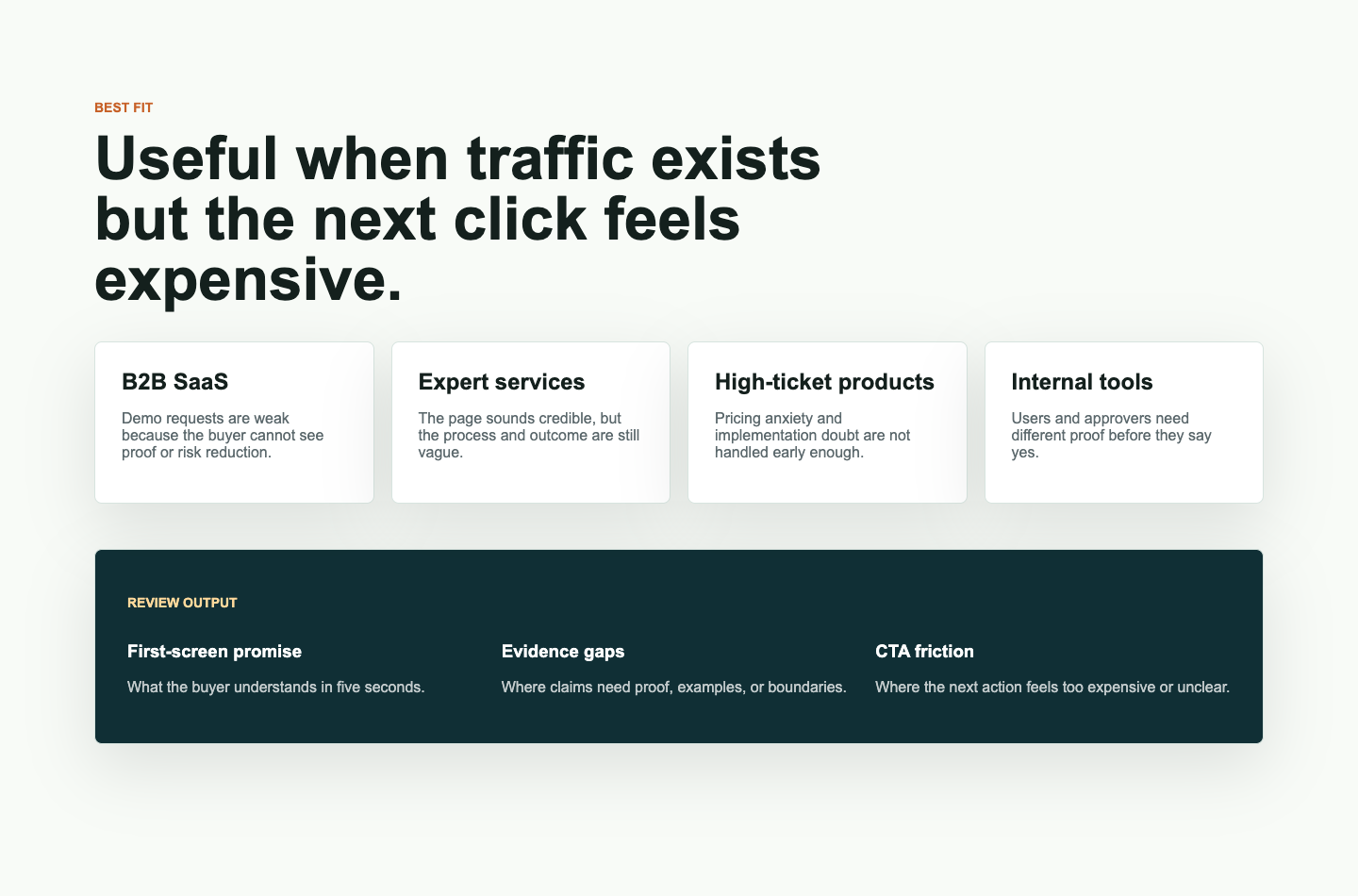
B2B SaaSLow demo requests

The product has features, but the page does not make the buyer's reason to act feel immediate.

Expert servicesProof feels thin

References, outcomes, process, and trust cues need to support a higher-stakes inquiry.

High-ticket offersPrice anxiety is high

The page needs better risk reversal, scope clarity, and objection handling before the CTA.

Adoption toolsStakeholders are confused

The page must speak to users, managers, and budget approvers without becoming dense.

First 5 secondsCan the buyer name the offer?

Headline, audience, outcome, and next action should read before the visitor starts hunting.

Proof gapIs there enough reason to believe?

Claims, examples, proof, process, and comparison cues are checked against the buyer's risk.

Next-action frictionDoes the CTA feel safe?

The review checks whether demo, pricing, sample, or contact should be the primary path.

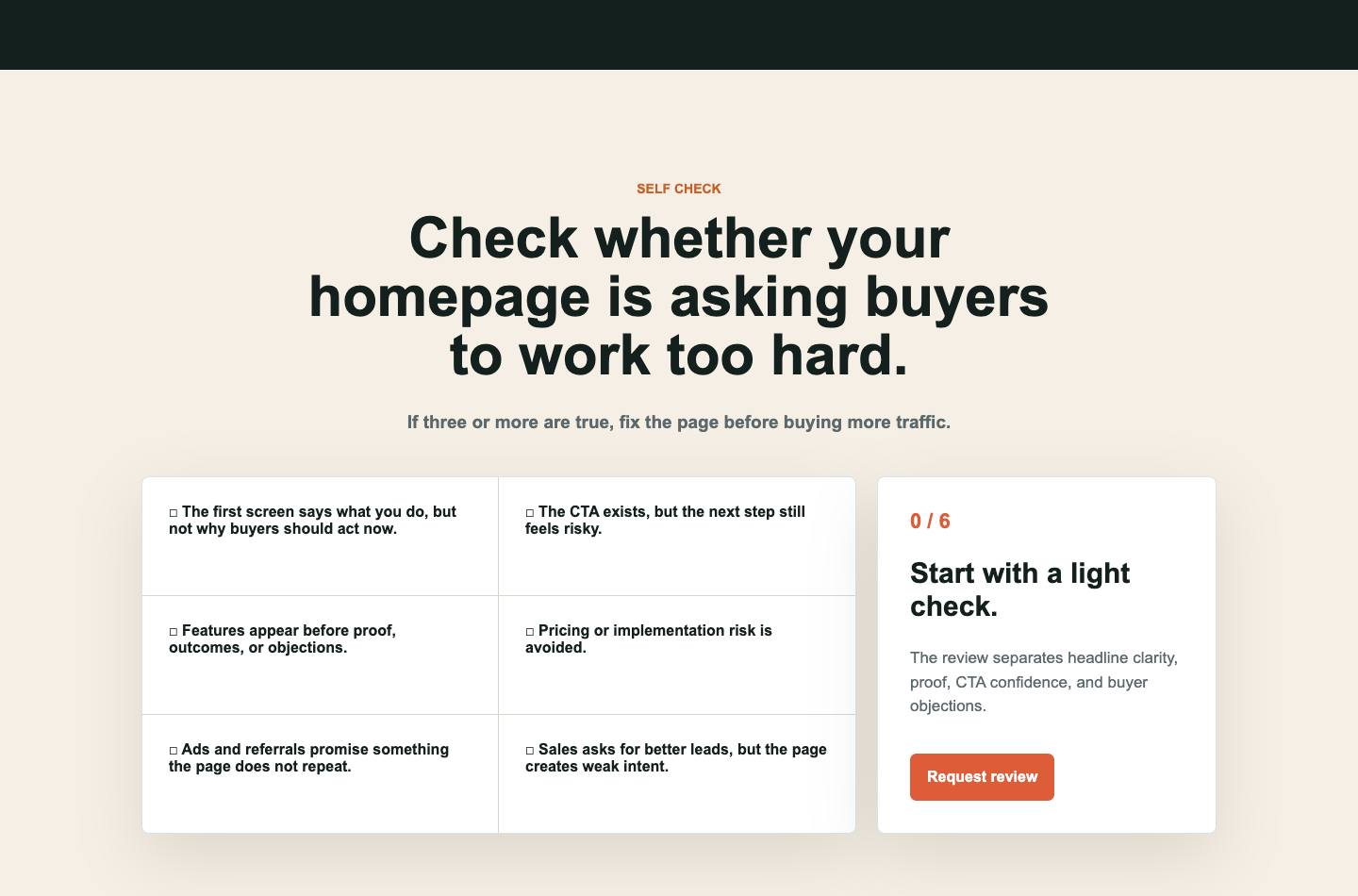
30-second self-check

Check every symptom that matches your page.

Package path

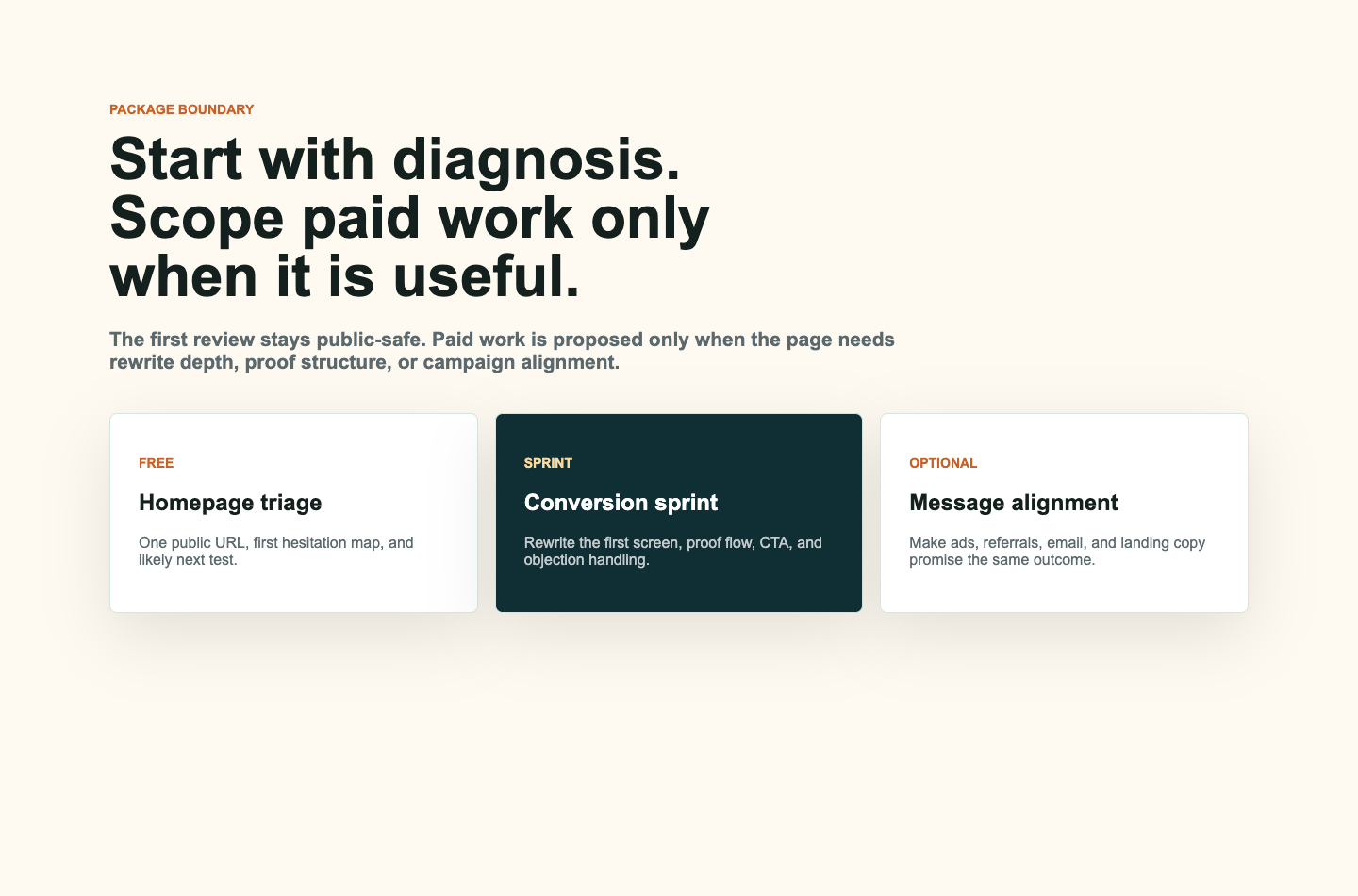
Start free, then only quote the scope the page actually needs.

The first pass can start from a public URL. Paid work is only proposed when the page needs copy rewrites, internal proof structure, or campaign-message alignment.

FreeFree homepage diagnosis

Map ten friction points and the top three fixes across first screen, proof, CTA, and objections.

URL-only start
FocusedHomepage Triage

Turn the diagnosis into revised headline, section order, CTA, and FAQ placement notes.

Quoted only if useful
SprintConversion Sprint

Align campaign copy, landing flow, and inquiry prompts into a short experiment plan.

Scoped after review
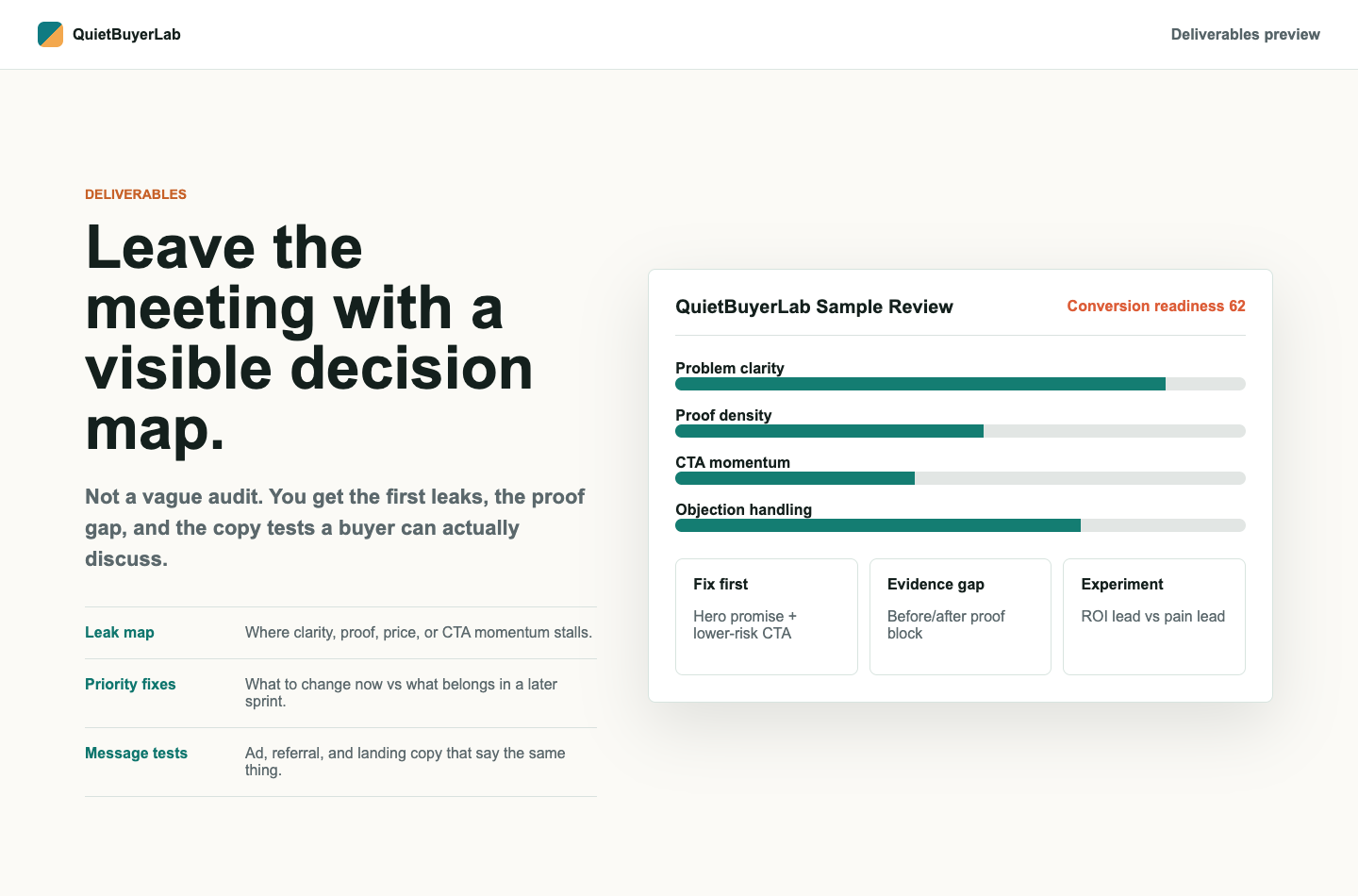
Conversion leak mapShow where confidence drops

First-screen clarity, proof, price anxiety, and CTA friction are mapped in page order.

Priority fixesPick the first three changes

The report favors testable copy, section-order, and CTA changes before a rebuild.

Promo copy candidatesAlign outreach and landing

Short message options help ads, DMs, referral notes, and the page promise the same thing.

FAQ

Does the free diagnosis force a paid project?

No. The free review separates the problem first. If the page can be improved without paid help, the output says what to fix yourself.

Do you guarantee a conversion-rate lift?

No. The review clarifies the hypothesis, the page changes, and the metric to watch so you can test before spending more on traffic.

Can this start with only a URL?

Yes. A public URL is enough. Helpful extras include current traffic source, ideal inquiry type, recent ad or email copy, and repeated customer objections.

Contact

Send one public URL to start.

Do not include sensitive revenue, customer, credential, contract, or private analytics data in a public request. A page URL and the current symptom are enough for the first pass.

RequiredPublic URL

Send the homepage, landing page, or service page that should create the inquiry.

HelpfulCurrent symptom

Say whether demo requests, price clicks, contact forms, or paid starts are weak.

OptionalPromo copy

Share public ad, DM, referral, or intro copy if you want message alignment checked.

Sample report

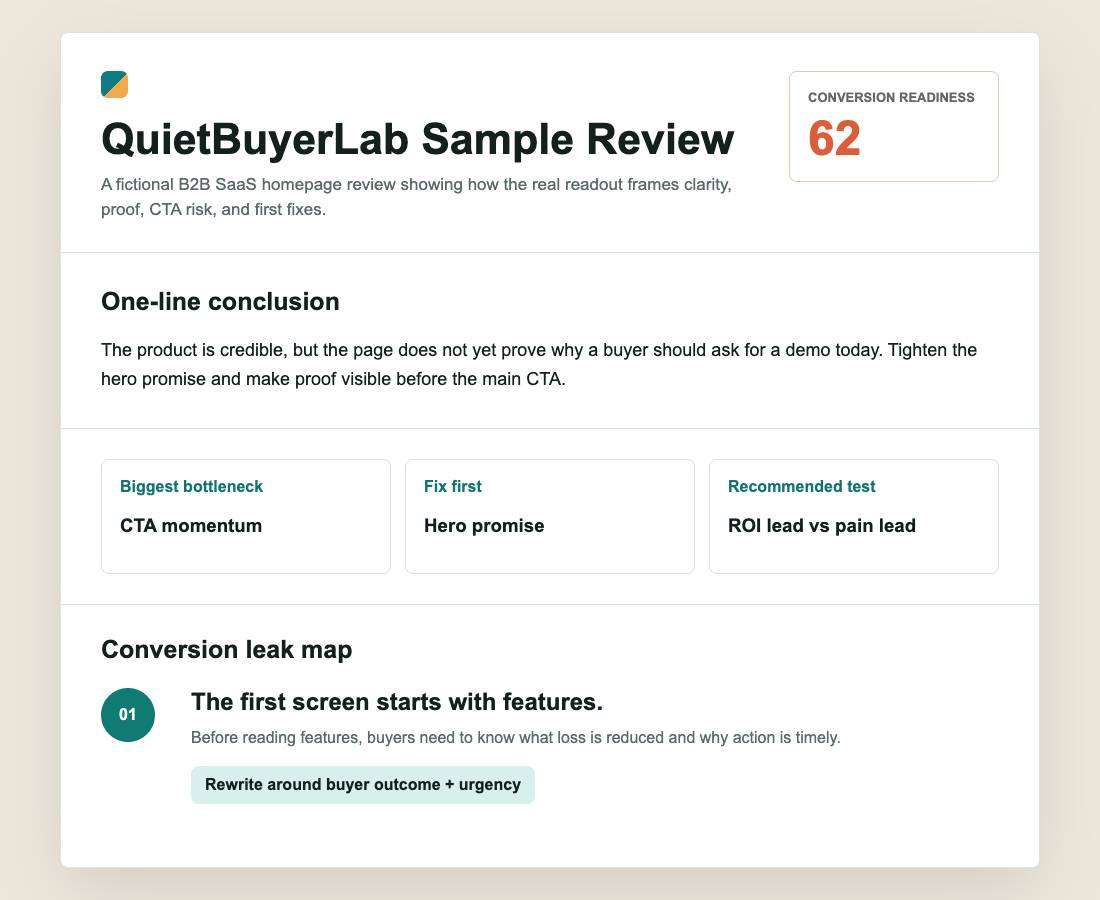
The output is a buying-flow map, not generic design criticism.

The prototype work is now represented here as an operational review page. Scores exist only to rank what to fix first.

Problem clarity88 / 100

The pain is visible, but the after-state needs sharper business language.

Keep and compress
Proof density54 / 100

Claims need more examples, comparison anchors, or concrete customer evidence.

Strengthen first
CTA momentum42 / 100

The next step creates too much choice and not enough confidence.

Test copy and placement
Objection handling71 / 100

Pricing, rollout, and internal approval concerns should move higher on the page.

Reorder FAQ
01

Share URL and symptom

Send a public URL, the weak conversion action, current traffic context, and ideal inquiry type.

02

Read like a hesitant buyer

The review follows the page from first impression to trust proof, CTA, price anxiety, and adoption objections.

03

Get ten leaks and three tests

The action map favors copy, section order, and CTA experiments before recommending a rebuild.

Homepage triageFirst-screen message

Who this is for, what changes after purchase, and why the buyer should care now.

Conversion sprintCTA and proof flow

Where confidence leaks between the headline, trust evidence, and the inquiry action.

Adoption page labStakeholder objections

Questions from users, managers, finance, security, and operators are pulled into the page.